In our third podcast, Dave and I discuss appearing on Question Time, TTIP, lung cancer screening, dementia and killer spiders. Enjoy! Share! Feed back!
www.medicave.co.uk
@mdmedicave
If you want to download it to your computer, you can click this link directly.
Or you can point your RSS reader or podcast app to the following feed:
http://feeds.feedburner.com/PodcastMediCave
Showing posts with label news. Show all posts
Showing posts with label news. Show all posts
Monday, 27 October 2014

Monday, 13 October 2014
Ban Boxing (and every other sport)!
 |
| Image: Andrzej Krauze - taken from New Scientist article |
I have to say that I don't like professional boxing. Not to say I've never watched it, but it does make me uncomfortable. I've watched amateur boxing at the Olympics. They wear headgear and it seems more of a sport to me. It may be no safer than the pro side but at least it has the sheen of a points-based contest. As argued in this New Scientist article, head injuries are the aim of pro-boxing. I don't see how we can still justify it as entertainment. I'd get rid of it if I was in charge. You may be glad I'm not.
That leads to the question: What level of risk is acceptable in a sport, either to the competitor or others? I don't have the answer to that, but all sports should be trying to get the balance right between preserving the game and protecting those playing. No, 'they make loads of money' isn't justification for putting them at unnecessary risk.
Dave and I talked about this on the pod, but we came across some interesting articles and stories that you might want to read.

I'm obsessed with NFL (American Football) at the moment and we mentioned in Podcast 1 that we wanted to talk more about it so we got to it in Podcast 2. Head injuries have been big news in the NFL for some time. Over 3000 former NFL players sued the league in 2012 and a settlement was agreed in 2013 for $765m to provide medical care for those affected.

NFL involves HUGE guys tackling each other. All players must wear a helmet, but this can only help so much. There is now an initiative starting in schools called Heads Up Football that aims to teach kids proper tackling technique and reduce head and spinal injuries. When concussions do occur, the NFL has guidelines in place for the assessment of players and when to let them play again. This involves pre-season baseline testing and the presence of neurologists at every game. When players sustain a concussion, they should not play until they have fully recovered as the risk from second injuries is great.
The lawsuit above covered a few different types of head injury, but it seems that the main issue was CTE or chronic traumatic encephalopathy - a degenerative disorder related to repeated concussions. It's linked with movement disorders, personality changes, substance misuse and suicide. Clearly, even minor head injuries need to be taken seriously. As a vast money-making machine, the NFL is finally starting to take responsibility for reducing these injuries and protecting its employees.
Football (our football) is much earlier in this journey. It's a non-contact sport though, right? Well that's fine until a keeper wants to get a ball with his hands or body and an attacker wants to score with his legs. Petr Čech (Chelsea) suffered a depressed skull fracture in 2006 and has been wearing protective headgear since. Last year, Tottenham were criticized for letting their keeper Hugo Lloris play on after being rendered unconscious in a similar collision.

Partially in response to this incident, the Premier League introduced new guidelines prior to the start of the 2014-2015 season. These included giving doctors (who are employed by the team...) the power to remove players from the game, rather than leaving the decision to the team or player. Surely the Premier League can afford an independent doctor at a game to assess these things - armed with a rule that says, "If a player is knocked out, they are getting subbed off. I don't care if you've used all your subs, it's great when a defender has to get his gloves on."
Last week, the inadequacy of the current set-up was displayed again when another Chelsea keeper was knocked out. He was assessed by the club doctor and allowed to carry on but was subbed later when he felt unwell, with blood coming out of his ear. FIFA have supported the decision to keep on playing (caution - Daily Mail link) but I can't see how unconscious players should be allowed to wake up and carry on. It's not bravery or commitment, it's reckless and stupid.
I don't watch much rugby, but the RFU puts out this info sheet, which looks pretty good. it talks about the 4 R's when concussion is suspected (such as when a player has been knocked out):
Recognise
Remove
Recover
Return
If any one knows whether this works in practice, I'd be keen to hear.
The conflict between safety and spectacle is rarely more apparent than in motorsport. Fans want speed (and many will freely admit, crashes) but no-one wants to see drivers hurt. As the pinnacle of motorsport, Formula 1 has improved greatly from earlier decades, where death was an accepted and inevitable part of the season. There's not been a driver death in F1 since I was ten. Circuit design, improvements in protective equipment, car safety and rule changes have all helped reduce the risk. The lessons learnt in F1 have filtered down to lower formulae and to our road cars.
But any thoughts that F1 was now "safe" were shattered last weekend, when Jules Bianchi crashed into a recovery vehicle that was by the side of the track to move another stricken car. I had read that he had undergone surgery for a subdural haematoma (bleed on the brain) but I can't actually find confirmation of this now so sorry if that isn't the case. What has been said is that he's suffered a diffuse axonal injury, where rapid acceleration and deceleration causes damage to nerve cells due to shearing. This is a common but devastating consequence of severe head injury.
We'll be thinking of him and his family.
At this point I'd like to say that motor sport, at all levels, can only run because of the dedication of a legion of unpaid marshalls, who stand out in all weather to keep the racers safe. They are backed up by knowledgeable and passionate officials and an enthusiastic community of doctors and paramedics who are constantly trying to improve medical provision at these events. Here's some concussion guidelines for F1 and for loads of information about Medicine in Motor Sport, read that.
 |
| A HANS device and helmet |
Will any good come from this? This accident occurred following a previous incident and the organizers have come under fire for not putting out a safety car to slow everyone down in wet conditions whilst the first car was recovered. There is a debate about closed cockpits in F1 (like a fighter-jet canopy to protect drivers' heads) but worry that fans won't like the look of it. Some fans will moan about every change in F1 but ultimately get used to it. We'll have to wait to see what lessons can be learned.
Ultimately, organizers should take all reasonable steps to protect their athletes. We, as fans and consumers, should accept changes to improve the safety of the sports we love.
Wednesday, 17 September 2014
Will I Wake Up During My Operation?

This is a major concern for many patients who have an
impending date for surgery. It seems to be a primal fear, lying there, unable
to speak, unable to move, in pain. But is it going to happen? A golden rule in medicine is that
nothing ever ‘never’ happens, but it’s very unlikely. ‘Awareness’ is reported
in 1 in 19000 anaesthetics. But the idea of it is terrifying, isn’t it?

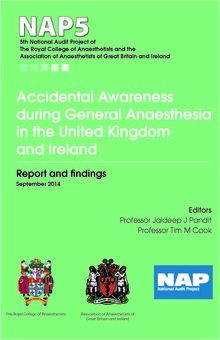
It’s made the news because of the NAP 5 audit. This is a
ginormous study involving every public hospital in the UK, looking for
incidences of AAGA – accidental awareness during general anaesthesia,
undertaken by the Royal College of Anaesthetists (RCoA) with the Association of
Anaesthetists of Great Britain and Ireland (AAGBI). It’s commendable that the
speciality would examine itself in this open and honest way.
Awareness. It’s a broad term. It could be someone who
remembered their breathing tube coming out at the end of an operation, it could
be someone who remembered something happening whilst they were sedated (and not
supposed to be completely unconscious). It could be someone who was not
adequately sedated when being moved from the operating theatre to the intensive
care. In the study, awareness was most likely to occur when just going to sleep
(induction) or when being woken up at the end of the operation (emergence)
rather than in the middle of operations.
To get your head round the results, it might help to know a
bit about anaesthesia itself. Skip this bit if you’ve ever given one.
Anaesthesia is an oft-misunderstood medical speciality. I think we should remember the incredible contribution that advances in anaesthesia have made to the world. Surgery that was once either completely intolerable or technically impossible is now performed safely and regularly. However, when
I started my training (I only did 18 months before changing specialty) I was asked if I was still a doctor!
It has been compared
to being an airline pilot, where all the action’s in taking off and landing and
you can just kick back for the middle bit. Like being a pilot, you need to be
trained for the worst-case scenarios. Unlike it, emergencies arise frequently.
During the operation, it might look like the anaesthetist is not doing much,
but they are monitoring, adjusting gas flows, giving antibiotics, analgesia and
planning the next phase of the procedure. They have to constantly modify their
techniques depending on how the operation is going or the patient is doing. But
what is ‘an anaesthetic’?

Anaesthesia can be local – you cut yourself and need
stitches and the A&E doctor injects some local anaesthetic (LA) to numb the
immediate area. Many minor operations in operating theatres happen under LA
alone, without an anaesthetist present.
A surgeon or anaesthetist may administer regional
anaesthesia by targeting one or a group of nerves to numb a larger area, for
example in foot surgery. This can occur alone, or in combination with a general
anaesthetic.
A neuraxial block may be used – an injection into the space
around the spinal cord will numb everything from the waist down and is handy
for knee surgery etc. An epidural works in a similar way. These are often used
in combination with sedation, where consciousness is reduced with medication,
but the patient is not fully anaesthetised.
A general anaesthetic (GA) is where a patient is given
medications to render them unconscious. This usually starts in the anaesthetic
room and involves several stages:
1) Induction
– Drugs are given, usually straight into a vein, to temporarily render them
unconscious. Once this happens, the patient can no longer protect their airway
and a device is inserted to keep it open and allow the delivery of oxygen and
anaesthetic gases later. If a breathing tube is to be inserted, then the
patient must be paralysed, to relax all the muscles in the mouth and throat and
allow the tube to pass.
2) Maintenance
– The patient is transferred to the operating theatre and is kept asleep. This
is usually with anaesthetic gases but can be with a continuous infusion of
medicine into the vein. The patient may breathe for themselves, depending on
the operation. For certain operations, such as abdominal procedures, continuous
muscle relaxation is needed so the patient remains paralysed and the breathing
is done by a ventilator.
3) Emergence
– Once the operation is finished, the anaesthetic gases are turned off and the
patient starts to wake. If they have been paralysed, then a reversal agent is
given first so their muscles can work again and they can breathe. Any
artificial airway is removed and the patient can be taken for further
monitoring in the recovery room.
There are many more ways to give an anaesthetic than to skin
a cat, I would imagine. You have to consider the patient and the procedure. In
some ways it’s a very scientific speciality, built as it is on the three P’s of
physics, pharmacology and physiology but in others it’s an art. You can learn
what the right anaesthetic is for a particular operation and the dose of a drug
that the average patient of a particular size, sex, age and fitness will need,
but it must be individualised and you must respond to all the information that
is available. You might be watching the patient and two screens with many
variables displayed whilst getting information from the surgeon and the rest of the team and administering five or even ten different drugs and
vapours. Anaesthetists are very well trained but you can see how there are
opportunities for error.

Why not just give more?
Fair question. Unfortunately, all the sleepy drugs have side
effects. Probably most importantly effects on blood pressure. Also, the more
you get, the worse you feel afterwards.
So what did the audit find? The headline figure is that AAGA
is reported once for every 19000 anaesthetics. This means that you are more likely to be killed in a traffic accident in any single year than experience
awareness during a single anaesthetic.
However,
the chances very much depend on the type and technique used. When neuromuscular
blockade is used (paralysis) then the incidence rises to 1:8000.
Why and when does awareness happen? Well, there are several
reasons...
During the induction phase, the anaesthetist needs to secure
the airway. This can be straightforward or take a little longer. The longer it
takes, the more chance the patient has of becoming aware of what’s going on.
They then need to be moved to the operating theatre and are not connected to
the anaesthetic machine at this time.
During maintenance, there are a variety of ways that the
anaesthetist determines whether enough anaesthetic is being delivered.
Sometimes EEG brain monitoring is used. The anaesthetic machine may give a
display of how much anaesthetic gas is being breathed out by the patient (a
good approximation of how much is in the brain). Small rises in pulse rate
might indicate that the patient is not ‘deep’ enough. Another is that a patient
may cough on the airway device or move on the table. This is not to say that
they are conscious, just that some primitive reflexes are being stimulated and
the patient needs more anaesthetic. Neuromuscular blocking drugs prevent this
movement and so take this valuable warning sign away.
As the patient wakes during the emergence phase after the
op, if the neuromuscular blocking drug is not adequately reversed, it can be
that the anaesthetic wares off before the paralysis. This could lead to
awareness without being able to move. For emergency procedures, the patient
must be more awake before the breathing tube is removed, to ensure that their
airway is protected if they were to vomit. There is a chance that they could
remember the tube coming out.
Particular operations are higher risk for AAGA as well –
heart surgery and C-sections as different drug combinations are needed in these
patients. Pregnancy poses many particular challenges to anaesthetists, due to
altered body shape and physiology and the need to care for two patients.
The study makes particular mention of reducing drug errors and how institutions can change lists and practices to reduce avoidable errors.
I think the main thing to pick out is that awareness is rare
but not absent. When it occurs it can cause significant psychological harm. Awareness includes many experiences that are not 'waking up in the middle of the operation'. But
the report is positive in that in identifies many ways in that the risks can be
reduced. So things will get better.
So will you wake up during your operation? It’s extremely
unlikely and will become even less so.
Saturday, 13 September 2014
Podcast Episode 1 - eCigarettes, Scottish Independence and the NFL!
In our first podcast, Dave and I talk eCigs and eCars, Scottish Independence, Ashya King, the NFL and dog ownership. Enjoy! Share! Feed back!
www.medicave.co.uk
@mdmedicave
If you want to download it to your computer, you can click this link directly.
Or you can point your RSS reader or podcast app to the following feed:
http://feeds.feedburner.com/PodcastMediCave
www.medicave.co.uk
@mdmedicave
If you want to download it to your computer, you can click this link directly.
Or you can point your RSS reader or podcast app to the following feed:
http://feeds.feedburner.com/PodcastMediCave
Monday, 8 September 2014
What is the Matrix?
The Matrix is everywhere. It is all around us.
Even now, in this very room.
You can see it when you turn on your television.
You can feel it when you go to work… when you go to church… when you pay your taxes.
It is the world that has been pulled over your eyes to blind you from the truth.
What truth?
That you are a slave, err, (insert your name here, unless it is Neo, then keep that one).

I watched it for about the twentieth time the other day. 1999, that film came out. My friends and I saw it at the cinema when we were 15. We hadn't seen a film like this before and were blown away by the special effects, the sounds, the slide down Nokia phone! Bullet time! And of course, the concept.
Now I don't actually think that we live inside a computer generated virtual reality. I'm also aware that I'm unlikely to be the first to compare the 'real' world to the Matrix. It still has a lot to say though.
As my walk through Ellesmere Port emphasised we are surrounded and bombarded by a world that is often out to hurt us, or at the very least, keep us quiet whilst bad stuff goes on elsewhere. Not all of it, not everyone, of course. The world is incredibly complex and everyone has their own set of incentives. The girl in the red dress isn't a computer program but has her own priorities and motivations.
But there is a system. Maybe multiple systems. Battling against each other. And it's hard to tell who is who. Companies have to make money. They have to make more money each year so people will buy their shares. They can grow their market, but if they have cornered the market then they have to make more money off each person. People within companies might care about your health, but most companies do not. They just need to sell you stuff. Maybe stuff you need, maybe not. Maybe they are selling booze, fags, takeaways, sugary drinks, time on the sunbeds or maybe healthcare itself. Either way, they care about profits. They care about your health if it is in line with their profits.
Now obviously companies employ people, but many don't care about their employees either.
On the other side should be the government, working for us, not for profit. National institutions such as the NHS are working for us, but bits are being snipped off and sold at an alarming rate. More and more contracts are going to private providers. This is often the more profitable end of an operation, leaving the NHS underfunded and having to cope with increasing disease with decreasing funding.
So let's break it down…
"You can see it when you turn on the television" –
'Television is the opiate of the masses'. The original quote was about religion by Karl Marx, not sure who coined the TV version. There is a lot of nonsense on TV. Watch it on Saturday night and you will gain little insight into the issues facing our world today. I asked someone if they were going to vote in the local elections. They said 'I don't know anything about politics, but how many Kardashians can you name?'
One, the one who married Kanye West.
TV is there to entertain us, but surely there's some room in there to educate us about what's going on. 15 million votes were cast for the final of series 7 of the X-factor according to the Wikipedia page (do not waste your time following that link). Yet only a third of eligible voters turned out for the local and European parliament elections this year. Some might say this was an argument for compulsory voting. I would say it's an argument for improved publicity and engagement, with options for online ballot casting. And compulsory voting.
Worse is the content between the programmes. If you watched TV for a whole day, how many adverts for unhealthy or high sugar foods, high interest short-term loans, gambling websites or booze would you see? How many would your children see? Advertising works, or they wouldn't advertise. I'm concerned when I see sexy young people 'vaping' on TV adverts. I'm sure e-cigarettes are better for you than tobacco, but that doesn't mean they should be promoted to young people as something cool to do.
"when you go to work" – Pretty broad this. How many people are trapped in low income or minimal wage jobs? Is there good job progression? Is there hope? Is childcare available and can you take advantage of training opportunities? Can you live an acceptable life on the minimum wage or are you still relying on benefits or debt? Employers have a responsibility to pay a living wage. If they won't, then the government has a responsibility to raise the minimum wage. Working full time should enable you to live.
"when you go to church" – Maybe you go, maybe you don't, but religious institutions still have an effect on your life. I went to Church of England schools and had to pray and sing with everyone else. I wasn't offered a choice until much later and it was never put to me that many people don't believe in Christianity and live perfectly fulfilling lives. 26 Bishops sit in the House of Lords and help decide our laws. Members of religious organisations are asked for their opinion on every topic under the sun and given a load of air-time.
Thought For The Day on Radio 4! What is that?! Programmes on Radio 4 should be either informative or entertaining. That is neither. Ditto The Archers.
"when you pay your taxes" – I've just read Thomas Piketty's Capital in the Twenty-First Century and it describes thoroughly and brilliantly how our financial and fiscal system funnels money from the poor to the rich and functions to widen the gap. We should have a progressive tax system that prevents the increasing inequality and divergence of wealth that we see in this country and others. Our taxation system benefits those who have money and power and wish to increase it. And I bet that you don't have access to an expensive accountant and aggressive tax-avoidance schemes.
There is enough money in this country to fund the NHS. We have good outcomes and provide excellent value to the taxpayer. If everyone paid their fair share and the NHS was given the funding it needed, we could do even better (and it would still be cheaper than most private systems).
"That you are a slave, Neo." – Not literally, I hope. But you probably aren't getting a fair portion of the fruits of your labour. I do not wish to promote wealth envy, just fairness (and I'm definitely not a communist!). The world is set up in a way that it is easy to make unhealthy choices and give your money to people who already have plenty. It's not designed to improve our health and well-being.
Later, the Matrix talks about the prophecy of 'The One' – "a man born inside who had the ability to change whatever he wanted, to remake the Matrix as he saw fit." In some way we all have this ability. (Imagine quiet music) It's our voice and our vote. If politicians are doing something you don't like, vote for someone else. Make sure that they bring in regulation that is there for you, not for the businesses that lobby them. (Music starts to build) We can choose the products that are sold to us by buying something different. We can make small changes in our lives that will make us healthier and take responsibility for our own well-being (louder). Write to your MPs, register to vote, write to the papers, rant on the internet! (music climaxes in a thundering crescendo!) We are all The One!
Boom, big finish. I frickin' love that film.
Monday, 1 September 2014
Scottish Independence Referendum
I'm not Scottish, I've never lived in Scotland and I've only been a couple of times. You may choose to ignore my opinion on the impending Scottish Independence referendum. I do have one though. And you've got this far. Wait for it...
I feel like I'd be tempted to vote yes if I were eligible. It's hard to make an informed choice given the quality of the information on offer though. Left-leaning parties tend to do well in Scotland and this may be an opportunity to re-structure the society in a more fair and equitable fashion. I think whether or not I'd be an iPad richer or poorer under that system is secondary to the overall distribution of resources within it.
What would happen to healthcare provision in an independent Scotland?
Scottish doctors seem to think it would get worse. A recent poll in the BMJ (with only a 14% response rate - 311 doctors) suggested that 60% of them plan on voting no. 91% of those no-voters cited a predicted worsening of the Scottish economy.
What I can't see is whether the pollers were allowed to give non-healthcare related reasons for their preferences. Doctors are also people and it may be that some of them feel like their personal circumstances might be better in the UK than in an independent Scotland and so be swayed towards a no vote. Some English doctors might plan on voting Conservative (or even UKIP!) at the next UK general election for a lower predicted personal tax burden rather than a belief that the health of our nation would be improved.
Those polling 'yes' gave greater autonomy in healthcare and research decision making as big factors.
As for other considerations, there's talk that the tax takings would decrease and there would be the cost of creating a new governance structure. But the NHS in the UK has to bare this cost every few years/parliaments anyway. It does seem that the Scottish would be keen to defend a system that is free at the point of use and that public will cannot be undervalued. Couple that with a keenness to take tough public health decisions to prevent disease (I'm thinking of tobacco control primarily with other policies following such as minimum alcohol unit pricing) and free prescriptions, you might find a lower disease burden to deal with. Could this mean an independent Scotland was healthier for all?
Either way, I'd be keen to see how an independent Scotland would work out. Would a more liberal and fair society be created with decisions taken to benefit the local population and with support by international legislation created in Europe? This might be be an improvement on the current distant government setup.
I listened to a good debate on Radio 4 the other week (I deemed this too pretentious to open the post with) and this and other media coverage gives the impression that people are actually talking about this referendum and are interested in the outcome. I contrast this with my own experience of trying to spread the word re: the recent council and European elections where my efforts were met with either 'I don't care about / follow politics', 'is there an election on?' or worse 'ok, how do I register to vote?' leading me to lament scientists' current failures in reliable time travel.
A no vote may have its own benefits to Scotland and the other nations of the union. One of the main ones I can see is that a generation of newly engaged and often liberal Scottish voters would be involved in the UK's next general election.
It would be sad to see them go but I'd wish them the best of luck.
Friday, 29 August 2014
Introduction
You can't avoid health news. Is the NHS failing or the best thing since sliced bread? And how much salt is in sliced bread anyway? And shouldn't we be off carbs altogether? Is this latest wonder drug all its cracked up to be? You might not care if you're well, you might focus on the issues that are currently affecting you or you might obsess over every substance that might heal or harm you. Either way, you might find a story a little extreme in its viewpoint and appreciate a second opinion. You might wonder if an experiment in a petri-dish has any relevance whatsoever to you and your family. You might just want more and more health news. If so...
Welcome to the inaugural MediCave health blog. It's not going to make you well, but hopefully it will help you make sense of the barrage of health news we receive every day. I understand your frustration. On the same day a food or similar might reduce your risk of heart disease, increase your risk of cancer, be good for some people but bad for others. We might worry about ebola but hear nothing about hip fractures in the elderly. Your local hospital might hit its waiting time targets but have poor cancer diagnosis rates. Is it a good place to go? Do you have any choice anyway?
All of this is inseparable from politics. Each news outlet has its own agenda. Should adults be free to make their own choices (and mistakes) or is it up to the government to intervene and protect the people? Is the NHS a sacred institution or can the private system do better?
I should declare my position on this now. Everything I write will be a blend of my own opinion, prejudices and interpretation of the evidence. I would be described by many as more left-wing in my thinking. Although I grew up in a Tory stronghold, I've become increasingly aware of health and social inequalities as I've progressed in my training and career and feel it is the duty of all those in power to work to reduce these. Other news outlets may not be so honest in their motivations but know now that this will colour almost everything that I put out on this, my own personal blog.
I've been a doctor for over six years, including 14 months working in medicine and critical care in New Zealand, a year and a half training in anaesthesia and the rest in various medical specialities in England. I'm currently working as a locum doctor in various hospitals around the north west of England whilst undertaking research in public health policy. I write this whilst "working" at a motor racing circuit as a track doctor (my environmental credentials may leave a bit to be desired at times...). I hope to pursue a career in public health and work at altering local and national policy to improve the health and well-being of everyone in Britain and beyond. I am not an authority on any particular medical subject, but do have broad hospital experience and this has fuelled an interest in these issues.
So what can you expect from this blog? Well don't set your watch by it. I'll be posting as and when I have the time and I find something interesting to talk about. Don't expect it to be as serious as this post. I hope you'll find it amusing and entertaining, as well as informative. I hope it will be interactive - feel free to ask any questions by email and twitter. I'll talk about documentaries, books, radio and TV shows, news stories and twitter feeds, basically anything that interests me and might interest you.
More excitingly, it will be aural. Coming soon will be Matt and Dave's MediCave podcast with me and some of my colleagues and friends. This will include a light-hearted look at the week's health news, our own take on other relevant issues and some stuff that has nothing to do with health at all but interests us. This podcast will happen once I sell some Xbox games and buy a microphone. That's the level we're at people.
Please check back, subscribe, read, listen to the podcasts, contact us. Please don't follow our advice too literally or be offended if we disagree with something your paper has printed. Please don't sue us, we're still paying off our student loans.
Many thanks,
Dr Matthew Atkinson MBChB, BSc (hons),
From now on, just Matt.
Hospital Parking
There's been a bit about hospital parking for visitors and patients. I agree that some of the fees are extortionate and should be reviewed. I'm not sure it should be free though.
http://www.bbc.co.uk/news/uk-28905695
I want to talk about hospital parking for staff though. Anyone who works in a hospital will know that this can be a major headache. It either takes weeks to get a staff permit, or you get turned down, or it's crazy expensive. Or it's fine, maybe.
Despite my love of motorsport and fast cars (ones I would like to own, rather than ones I do own), I am a supporter of sustainable transport. There are proven health problems associated with air pollution and benefits to exercise so I think we should all make an effort if we can. Global warming is going to affect the health and wellbeing of the world's people. Not to come over all pius but I do commute by public transport when I can, either by bus or train and cycle. The hospitals I work at are making efforts in helping cyclists get to work, in the form of safe cycle storage, showers and changing facilities. They are all serviced by buses in some way or other.
There was a study in last week's BMJ (now called thebmj in a reverse the facebook to just facebook branding exercise), which showed that those that commute by walking and cycling or using public transport had a lower body mass index and percentage body fat than those that use their cars. So maybe hospitals should get rid of staff car parking for those who live nearby or can get public transport.
http://www.bmj.com/content/349/bmj.g4887
Sometimes, however, you just need your car. Shift workers may not feel safe arriving and leaving in the dark by public transport. Sometimes the weather's awful or you've got a load of paperwork to bring in and sometimes you just can't be arsed. On those days, you need somewhere to park.
Generally, this means a staff parking permit. This tends to be a fixed monthly amount taken from your wages and proportional to your salary. So far, so fair.
But what if you only need your car twice a month? Your per-visit price would then be quite high. You've paid that set amount, you might as well get your money's worth. So you drive more often and we all miss out on the benefits of public transport.
I've heard this argument before in relation to other one-off fees such as car tax. Once you've paid it, then your cost per additional journey (or car park use) is zero, so fill your boots.
So what's the alternative? The single day parking price at my most recent hospital is £8. Two night shifts and you might as well pay monthly.
I would say is that the alternative is a reduced per-visit rate for staff. This would encourage other forms of transport without excessive punishment of those who use their car from time to time. You could retain a monthly price for those who need to use their car every day.
Is this viable for trusts? Many now farm out their parking to external companies and rely on the income that this brings in to subsidise some of their loss making activities, like providing emergency care to sick patients. But surely there's a way of structuring the pay as you go payments so they don't lose too much money, whilst making public transport a more attractive option to staff.
We already have staff smoking cessation programmes and other initiatives, such as subsidized gyms. We owe it to the staff who give so much to the hospital to make sure they stay healthy. The health system's biggest asset is those working within it.
We already have staff smoking cessation programmes and other initiatives, such as subsidized gyms. We owe it to the staff who give so much to the hospital to make sure they stay healthy. The health system's biggest asset is those working within it.
Subscribe to:
Posts (Atom)