Showing posts with label health politics. Show all posts

Friday, 28 November 2014

Strike.


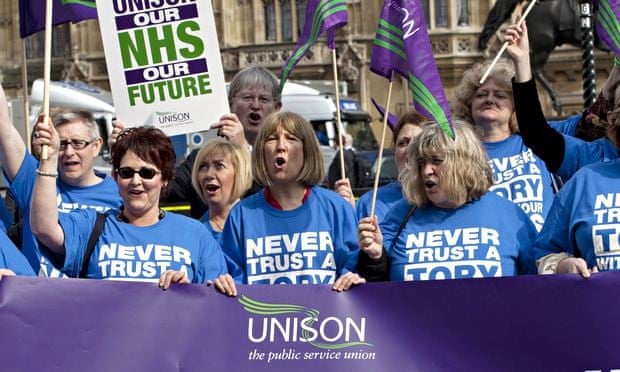
There was further NHS strike action this week. You may or may not have noticed. This is because health workers set out to make a point, withdraw their labour but not to cause harm to patients.

I think most of us would agree that we would rather see our health workers working and not picketing the front of our local hospital. The thing is, is that most of them would rather be doing their jobs than stood out front in the cold. Some of them have had to take difficult decisions to forgo a day's wage to support the strike action. Can we assume, therefore, that they have done it for a good reason?


The global financial cliché has put ever increasing pressure on our publicly funded services. This has translated into a pay freeze for many NHS workers over the past four years, though the government deny it.

Most jobs within the NHS follow the Agenda For Change payscale. A given job will have a payband and within that there will be several incremental pay points. For example, a newly qualified nurse might be a band 5. If they meet their targets at appraisal, after a year they will move up to the next pay point within that band. If they are promoted to a deputy ward manager role, they will move up to the next band, where they will start again at the first pay point within that band.

The government has accepted a 1% pay rise, but only for those who are not entitled to an incremental rise (moving up to the next pay point after a year).

So a nurse/physiotherapist/occupational therapist/radiographer etc may have to work for several years and move up to the top of their pay scale before they are entitled to this 1% rise. Yes, they would get their annual increment, but because of inflation, each pay point is worth less and less every year.
This means that as a group, healthcare workers are earning less than their predecessors did 5 years ago. 

I think that pay needs to at least match inflation and that is before incremental increases that recognise the value of another year's experience and training.

If pay falls in real terms (as it has) then morale follows it.

You cannot separate health from wealth and many of our lower paid colleagues are really struggling to cope. There are some who feel they cannot support strike action because they cannot afford to lose 1 day's pay. Making a less-wealthy group of society even less wealthy will cause more social and health problems in the future. It will also affect recruitment.

How many radiographers, physios and OTs will be advising their kids to follow them into their professions when it's clear that the government doesn't value them?

In places where there is a reasonable amount of private sector activity, you will lose valuable staff to other companies. In places where there is not, such as many northern towns and cities, then people rely heavily on public sector employment as their only chance of a decent career. I also think it's naïve to blame managers for everything (as the UKIP representative did on Question Time when I asked about this) as healthcare is incredibly complex and someone needs to steer the ship.


Pay is not the only thing getting worse. Look at page 5 of this document for a comparison of pension schemes and you will see that it is moving towards career average (rather than final salary), with later retirement ages and reduced lump-sum benefits. Many workers, such as doctors, will have to make higher pension contributions. This led to the BMA taking strike action in 2012 for the first time since 1975.

Financially speaking, people don't have much sympathy with doctors and I can understand this. We are a relatively well remunerated profession. Junior doctors, however, end up worse-off year on year. Doctors' pay is calculated on a different pay scale. The pay has been frozen in a similar way to that of other healthcare workers. The only 'pay rise' they have received is when they move up from one year to the next having gained extra skills and taking on extra responsibility. If you want to see how the Daily Mail reported this please read here. Please also read the comments below to see some angry doctors' responses. The pay increases are, in effect, for a promotion from one grade to the next. When you get there, you get paid the same as what you would have received 4 years ago. With inflation, this amounts to a pay cut.

This is not the only financial hit junior doctors have taken in recent years. Tuition fee increases mean student debt for the 5 or 6 years of medical school has exploded. Up to 2007, hospitals had a duty to provide accommodation for first-year doctors. Now they don't. The loss of this benefit-in-kind amounts to a pay cut. The European Working Time Directive has reduced hours, but also reduced pay-banding for junior doctors. The NHS pension scheme is worse with each iteration, as discussed above.

Hunt will say that if we pay staff, we will have to cut jobs. This is a fallacy. The fact is, is that the NHS needs more money putting in. I think this needs to come from HMRC getting all the tax it's owed from the wealthy and from big businesses. I also think we need a more progressive tax system, with a tax on wealth, so that those who have the most, contribute more to our society and the country from which they benefit.

We spend less on healthcare than most comparable countries. We have an increasing inequality within our society. Pay cuts to healthcare workers affect many of the poorest in our society and will create problems for the future. I think we have to find the money to pay staff what they deserve.

Tuesday, 4 November 2014

Podcast Episode 4 - Drugs, boozy calories, BBC Question Time

In our fourth podcast, Dave and I discuss appearing on Question Time, calorie labelling on alcohol, drug treatment vs punishment and some nonsense about beef. Enjoy! Share! Feed back!

www.medicave.co.uk
@mdmedicave

If you want to download it to your computer, you can click this link directly.

Or you can point your RSS reader or podcast app to the following feed:
http://feeds.feedburner.com/PodcastMediCave

Monday, 27 October 2014

Podcast Episode 3 - TTIP, lung cancer and dementia screening, killer spiders...

In our third podcast, Dave and I discuss appearing on Question Time, TTIP, lung cancer screening, dementia and killer spiders.  Enjoy! Share! Feed back!

www.medicave.co.uk
@mdmedicave

If you want to download it to your computer, you can click this link directly.

Or you can point your RSS reader or podcast app to the following feed:
http://feeds.feedburner.com/PodcastMediCave

Wednesday, 22 October 2014

BBC Question Time

A previous Liverpool episode
A quick note to say that I'm going to be in the audience for BBC Question Time on Thursday 23/10/2014 at 22.35 on BBC 1 from Liverpool.

On the panel are Scotland's first minister Alex Salmond MSP, Labour's shadow energy secretary Caroline Flint MP, Conservative minister for disabled people Mark Harper MP, UKIP's Louise Bours MEP and the leader of the Unite trade union Len McCluskey.

We all have to submit one question by email today. Max thirty words.

I wanted to give people the opportunity to criticize the government's funding of the NHS and the pay-freeze imposed on its staff. I didn't just want to rant leftily, as I doubted that that would make the cut.

It also has to be based on current news events.

I went for:

How do we save our NHS from the ‘perfect storm’ of austerity, increasingly expensive treatments and an ageing population, whilst paying staff the wages they deserve?


It would also give the opportunity to discuss staff pay and the recent strike action.

I need to submit a second question on the day when I arrive at the venue.
What would you ask?


I hope I get to ask it. Keep an eye out for me.

Monday, 13 October 2014

Podcast Episode 2 - Anaesthetic awareness, sporting head injuries, ebola.

In our second podcast, Dave and I answer the question 'Will I wake up during my operation?' and discuss sporting head injuries, ebola, green cola and dogs.  Enjoy! Share! Feed back!

www.medicave.co.uk
@mdmedicave

If you want to download it to your computer, you can click this link directly.

Or you can point your RSS reader or podcast app to the following feed:
http://feeds.feedburner.com/PodcastMediCave

Monday, 22 September 2014

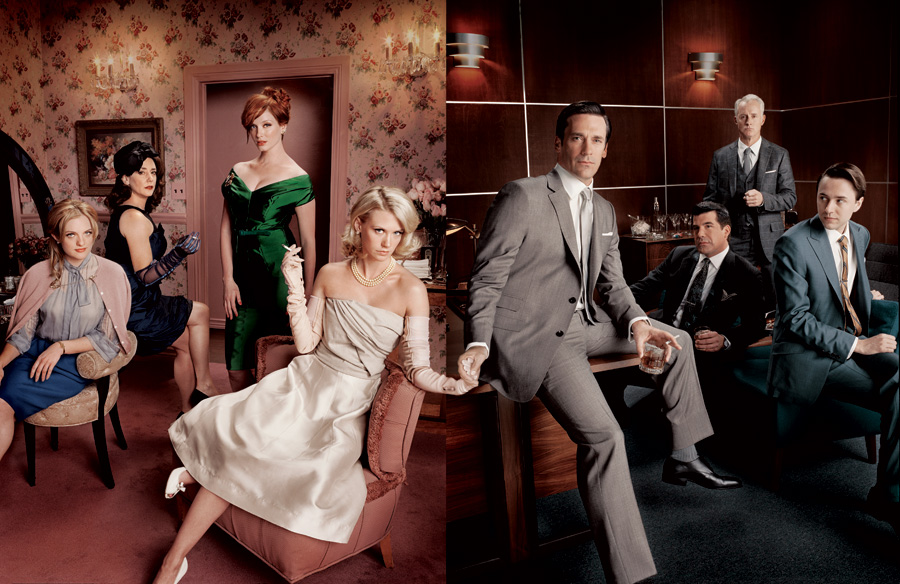
Mad Men


Mad Men is our show at the moment. We're only on series three but flying through it. It's early 1960s Manhattan and the Mad Men are the advertising executives of Madison Avenue. The word 'Men' refers to just that. In this industry, the males get the office, the big salary and the prestige. The women work as secretaries and try to pick up husbands. The one girl who breaks through struggles to be treated on equal terms.

It's not just a man's world but a white man's world. The African-Americans have to content themselves with operating the lift. The series touches on the struggles in the South, but this is just another unfairness you have to accept in the show.

Much of the show trades on the discomfort the viewer feels in the inequalities of the day and in the smugness in just how far we have come. There are many ways in which the world has improved and in which we can be proud. However, I think it pays to be reminded that we're only part way down the road with regards to many of the issues portrayed.

Gender inequality.

Yes, women can now get top jobs but it's still no level playing field. Australian women earn 18.2% less than their male counterparts. Less than a third of Northern Ireland's top jobs are held by women. This Guardian article shows some of the progress made but also the challenges remaining.

We should be increasing childcare provisions for working mums and eliminating pay gaps. Organisations should be working to improve access to top jobs. This has to start in parliament.

The darker side of male and female workplace inequality rears it's head in the show, with sexual harassment rife. There's also really disturbing scene of rape within a relationship. It would be great to say that thankfully this doesn't happen any more but I can't.

Smoking


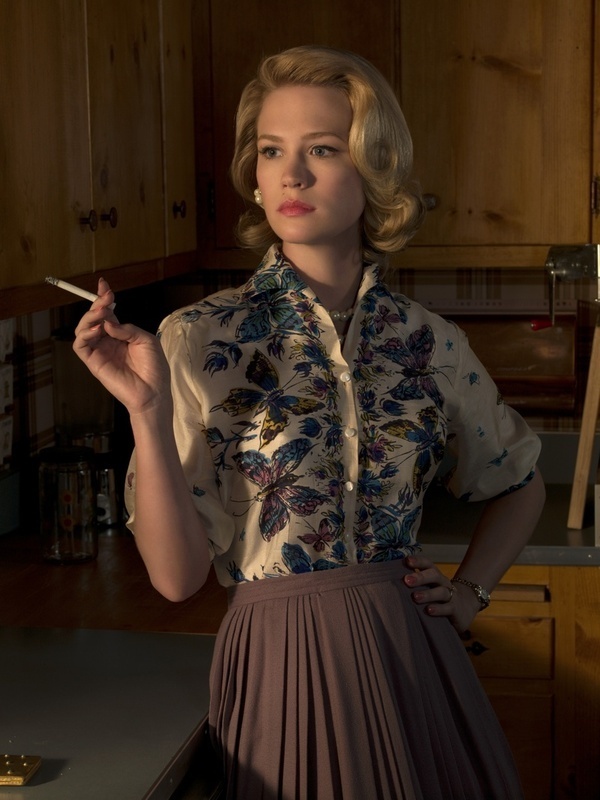
There is a LOT of smoking in Mad Men. In the office, in the car, around the kids. I'm glad that we see less of it on TV now. This is a period piece, but I'm not convinced that that justifies it. Smoking rates have come down since the sixties and legislation such as banning smoking in enclosed public places and in cars carrying children should be celebrated. The Mad Men have a tobacco account and are struggling to cope with the negative publicity surrounding links with cancer and heart disease.

I remember tobacco advertising and sponsorship in the UK. Good riddance. The tobacco companies are fighting back though. They are challenging plain packaging laws and moaning about hiding cigs in supermarkets. They are buying up e-cigarette companies and marketing them to young people. My co-podcaster Dave doesn't mind this but I do not want people to remain addicted to nicotine, or to start smoking as young people. All the while the companies are promoting cigarettes in developing countries and there are now more than 300 million smokers in China.

Alcohol


There's almost as much boozing as smoking. Every time someone walks into another office, they get a drink poured. After work drinks lead to accidents (and affairs) and drink driving is the norm. The show is also a vehicle for product placement. Them talking about how to advertise a particular product on the show IS advertising that product, obviously.

The costs of alcohol to the NHS alone run into the billions. Advertising definitely plays a part but price is likely to be a bigger factor in determining consumption. The government caved into pressure from the alcohol industry and backed down on minimum unit pricing.

We have not made the same leaps forward on alcohol that we have on smoking.

In The End

It's good to think that some things have got better. Mad Men is set before car seat-belts were compulsory. Now we wouldn't think of getting in a car without them. There are no actual tobacco adverts on British TV anymore. But there is still big money to be made in advertising, because it works. It might be cigarettes in China, e-cigarettes on our TV, junk food with kids toys, Coke pretending to care about health, the excitement of gambling or winning in an online casino or lager companies sponsoring major sporting events. We can look back at the sixties and be glad that things have moved on. In many ways, however, the adverts are just more clever and the Mad Men are still one step ahead.

Saturday, 13 September 2014

Podcast Episode 1 - eCigarettes, Scottish Independence and the NFL!

In our first podcast, Dave and I talk eCigs and eCars, Scottish Independence, Ashya King, the NFL and dog ownership. Enjoy! Share! Feed back!

www.medicave.co.uk
@mdmedicave

If you want to download it to your computer, you can click this link directly.

Or you can point your RSS reader or podcast app to the following feed:
http://feeds.feedburner.com/PodcastMediCave


War On Drugs - Top Ten Films!

Have you seen End of Watch? My wife and I watched it this week and it made me (almost) cry. Not in the usual Hollywood way. And not in the Apollo 13 triumph over adversity way (the other film that always gets me). It’s a buddy movie about two cops in south-central LA who are doing their best to uphold the law and take down the bad guys. The crime in question is drug dealing and the violence that goes along with it.

It’s the way it’s shot as a realistic fly on the wall / found footage type thing (often a crap start to a film) that sucks you in and really makes you feel it at the end. No one wins. It made me think about the senseless loss of life on both sides of the law that have occurred in the War on Drugs.


So in true box-office style, here are my top-ten films that depict the tragedy of the War on Drugs.

10 - City of God

The birth of a Rio De Jeneiro cocaine empire and the violence that accompanies it.  Think of cocaine and cannabis and many will think of Central and South America. Be it the Columbian cartels, Mexican narco-terrorism or farmers surviving on growing 'Bolivian marching powder'. 

Several countries are making progressive strides though. One example is Uruguay, who are regulating production and sale of cannabis. This graphic from Drug Law Reform explains how it works. US states, such as Colorado are taking their own steps. As you can see, it's not designed to create a free-for-all, but to control who has access to cannabis. The aim is to take production and sale out of the hands of the criminals and place it within a regulatory framework.

9 - Scarface

The glamour of running a cocaine business in Miami! Until you end up hooked, friendless and full of bullet holes. This one is ridiculously over the top, but it shows where the money goes, to local gangsters, paying off officials and ultimately to huge and powerful cartels, leading to politcal instability and conflict in producing nations.

8 - Human traffic

The story of a night out involving alcohol, ecstasy, cannabis and, I think, cocaine.
This film is showing its age now. Ecstasy use is decreasing amongst young people, possibly being replaced by newer psychoactive substances - 'legal highs' and our drug laws are struggling to ban the substances quick enough. If they were all brought under the same regulation as alcohol, tobacco and other currently illegal drugs, then the onus would be on the manufacturer to prove contents and safety and scientists would stand a better chance of studying the substances to aid classification and control.

All drugs have adverse effects. I include alcohol and tobacco in that. There are, however, millions of people who take drugs and don’t end up as addicts or in hospital. They must enjoy themselves, or they wouldn’t take them. When people do come to harm, it is often a failure of education. When Leah Betts died in 1995 after taking ecstasy, there was a huge national campaign against the drug. It can be dangerous and there are deaths associated with it but in her case it was likely because she drank several litres of water in a short period of time (leading to low blood sodium levels and swelling of the brain) rather than the toxicity of the drug itself.

Educating users on how to avoid harm is a more pragmatic approach than hoping they won’t take it at all. Other fatalities have come because of mixing drugs together or taking drugs with dangerous impurities. If they were sold in a pharmacy, with warning labels and advice, this would be much less likely to occur.

Professor David Nutt was fired from the government’s Advisory Council on the Misuse of Drugs for suggesting a more coherent approach to drug classification, presumably based on actual harm to users and society rather than political hysteria and the thoughts of the Daily Mail. At some point he pointed out that ecstasy was less dangerous than horse riding as well as tobacco and alcohol though I think this was after his dismissal. Scientists do not say that drugs are safe, just that they should be classified according to harm. Many now think that legalizing and regulating (and of course taxing) is the best way to reduce this harm.

7 - Trainspotting

Fairly obvious but it does depict the devastating effects of heroin addiction and how hard it is to get off. It shows the strength of the addiction and the lengths to which people will go to get their fix. What it also shows is that the threat of criminal punishment does nothing to alter this. Whether it’s a crime or not, addicts need their drugs. Not all drugs are equal. There is no doubt that heroin is harmful. It wouldn't take long walking around my local city to find someone who has lost one or both legs due to the drug. People die from overdoses. People catch life threatening diseases from using dirty needles. Addiction fuels crime.

People need treatment and this takes time, effort and money. People also need to know that there’s a viable alternative life to the one that they are trapped in. Prohibition is a public health disaster. If you want people to take less heroin, locking them up is not the answer. They need support and compassion. Clean, unadulterated drugs or substitutes, counselling, needle exchange programmes, detoxification facilities, accommodation and the prospect of a job and a future.

6 - 25th Hour

The drug dealer’s going to prison. There’ll be another one to take his place. He made a shed-load of money but lost. The temptation will be there for the next one. I put this one in because Philip Seymour Hoffman is fantastic in it and now he’s dead. That’s very sad. The fact that his drug taking was illegal didn’t stop him wanting to take it. The fact that drug dealing is illegal doesn’t make them hard to buy. Prohibition failed and a great actor died.

5 - Requiem for a Dream

A tale of a dream of a quick buck from selling heroin turns to a tale of addiction and illness. The protagonist ends up in prison and there’s devastating physical consequences of his drug use. The American legal system is bonkers. Mandatory minimum sentences for drug offences destroy communities. Whole generations are in prison or dead. This chap is also denied proper medical care because he’s in jail. It’s no better for his mum though, who gets hooked on prescription diet pills.

If drugs were legalized and regulated, then more dangerous substances like heroin would only be available through pharmacies or other licensed medical establishments. There wouldn’t be a market for dirty or adulterated street drugs and this guy would have looked for another way to make a living and would have stayed out of jail or received proper treatment for his illness. The money saved in law enforcement and gained in taxing less dangerous substances, could be used for education and treatment to keep people off more harmful drugs.

4 - Breaking Bad

You’ve all seen it, people love it and yes, it's not a film. Thankfully crystal methamphetamine has not made a huge impact in the UK. Interestingly, whereas crack cocaine hit black neighbourhoods in the USA, meth has had a bigger impact on poor white areas. Again, it’s a cheap, highly addictive drug, with huge profits to be made and law enforcement cannot stop it. Educate, inform, treat, regulate.

Another point is that Walter started all his drug empire shenanigans because he was faced with huge medical bills after getting lung cancer. Under the NHS, his treatment would have been free. Remember that. 

3 - A Scanner Darkly

A messed up dystopian future (as most of my favourite books and films tend to involve) is the setting for this kind of animated live action film where a cop goes undercover to expose the source of a new drug called Substance D that has swept America. He is overpowered by the drug but does make some amazing discoveries along the way. This is the War on Drugs lost.

2 - The House I Live In

If you want to know more about what America's drug policies have done to its people, please watch this. This great docco interviews people on both sides of the failed War on Drugs. Police, officials, criminals, users and prisoners. Watch it, you’ll learn a lot. And look at their site.


1 - The Wire

Not a film, but the five series of this Baltimore-set show do more than anything else I’ve seen on TV or film to portray the futility of the War on Drugs. There’s good and bad on both sides. There’s murder after murder, death, relapse into addiction. There’s an overstretched police department who are struggling to keep up with the drug-gang related murders. There’s people born into families where ‘the game’ is all people have ever known, with no hope of a better life. Schools are underfunded and kids have no role models other than older gang members. There’s a couple of big winners and a whole heap of losers. The worst thing is that at the end of it all, nothing’s changed. This is a stunning examination of the War on Drugs, urban decay, education, law-enforcement, city politics and the media. It makes me laugh, shout at the TV, frustrated and sad and I love it.

More...


I could give all the arguments for and against legalizing and regulating drugs, but helpfully it’s been put in this great information leaflet by The Transform Drug Policy Foundation. It would be hard and there would be unintended consequences. It would require a lot of political will and international co-operation. A step-wise move towards the goal is the most likely. What we need to do now is have an honest debate about the pros and cons. Look at the evidence from other nations, make the conversation follow science and reason and not right-wing hysteria. People will take drugs, whatever the rules are. It's our duty to help reduce harm.

Monday, 8 September 2014

What is the Matrix?

The Matrix is everywhere. It is all around us.
Even now, in this very room.
You can see it when you turn on your television.
You can feel it when you go to work… when you go to church… when you pay your taxes.
It is the world that has been pulled over your eyes to blind you from the truth.

What truth?

That you are a slave, err, (insert your name here, unless it is Neo, then keep that one).


I watched it for about the twentieth time the other day. 1999, that film came out. My friends and I saw it at the cinema when we were 15. We hadn't seen a film like this before and were blown away by the special effects, the sounds, the slide down Nokia phone! Bullet time! And of course, the concept.

Now I don't actually think that we live inside a computer generated virtual reality. I'm also aware that I'm unlikely to be the first to compare the 'real' world to the Matrix. It still has a lot to say though.

As my walk through Ellesmere Port emphasised we are surrounded and bombarded by a world that is often out to hurt us, or at the very least, keep us quiet whilst bad stuff goes on elsewhere. Not all of it, not everyone, of course. The world is incredibly complex and everyone has their own set of incentives. The girl in the red dress isn't a computer program but has her own priorities and motivations.

But there is a system. Maybe multiple systems. Battling against each other. And it's hard to tell who is who. Companies have to make money. They have to make more money each year so people will buy their shares. They can grow their market, but if they have cornered the market then they have to make more money off each person. People within companies might care about your health, but most companies do not. They just need to sell you stuff. Maybe stuff you need, maybe not. Maybe they are selling booze, fags, takeaways, sugary drinks, time on the sunbeds or maybe healthcare itself. Either way, they care about profits. They care about your health if it is in line with their profits.

Now obviously companies employ people, but many don't care about their employees either.

On the other side should be the government, working for us, not for profit. National institutions such as the NHS are working for us, but bits are being snipped off and sold at an alarming rate. More and more contracts are going to private providers. This is often the more profitable end of an operation, leaving the NHS underfunded and having to cope with increasing disease with decreasing funding.

So let's break it down…
"You can see it when you turn on the television" –
'Television is the opiate of the masses'. The original quote was about religion by Karl Marx, not sure who coined the TV version. There is a lot of nonsense on TV. Watch it on Saturday night and you will gain little insight into the issues facing our world today. I asked someone if they were going to vote in the local elections. They said 'I don't know anything about politics, but how many Kardashians can you name?'

One, the one who married Kanye West.

TV is there to entertain us, but surely there's some room in there to educate us about what's going on. 15 million votes were cast for the final of series 7 of the X-factor according to the Wikipedia page (do not waste your time following that link). Yet only a third of eligible voters turned out for the local and European parliament elections this year. Some might say this was an argument for compulsory voting. I would say it's an argument for improved publicity and engagement, with options for online ballot casting. And compulsory voting.

Worse is the content between the programmes. If you watched TV for a whole day, how many adverts for unhealthy or high sugar foods, high interest short-term loans, gambling websites or booze would you see? How many would your children see? Advertising works, or they wouldn't advertise. I'm concerned when I see sexy young people 'vaping' on TV adverts. I'm sure e-cigarettes are better for you than tobacco, but that doesn't mean they should be promoted to young people as something cool to do.

"when you go to work" – Pretty broad this. How many people are trapped in low income or minimal wage jobs? Is there good job progression? Is there hope? Is childcare available and can you take advantage of training opportunities? Can you live an acceptable life on the minimum wage or are you still relying on benefits or debt? Employers have a responsibility to pay a living wage. If they won't, then the government has a responsibility to raise the minimum wage. Working full time should enable you to live.

"when you go to church" – Maybe you go, maybe you don't, but religious institutions still have an effect on your life. I went to Church of England schools and had to pray and sing with everyone else. I wasn't offered a choice until much later and it was never put to me that many people don't believe in Christianity and live perfectly fulfilling lives. 26 Bishops sit in the House of Lords and help decide our laws. Members of religious organisations are asked for their opinion on every topic under the sun and given a load of air-time.

Thought For The Day on Radio 4! What is that?! Programmes on Radio 4 should be either informative or entertaining. That is neither. Ditto The Archers.

"when you pay your taxes" – I've just read Thomas Piketty's Capital in the Twenty-First Century and it describes thoroughly and brilliantly how our financial and fiscal system funnels money from the poor to the rich and functions to widen the gap. We should have a progressive tax system that prevents the increasing inequality and divergence of wealth that we see in this country and others. Our taxation system benefits those who have money and power and wish to increase it. And I bet that you don't have access to an expensive accountant and aggressive tax-avoidance schemes.

There is enough money in this country to fund the NHS. We have good outcomes and provide excellent value to the taxpayer. If everyone paid their fair share and the NHS was given the funding it needed, we could do even better (and it would still be cheaper than most private systems).

"That you are a slave, Neo." – Not literally, I hope. But you probably aren't getting a fair portion of the fruits of your labour. I do not wish to promote wealth envy, just fairness (and I'm definitely not a communist!). The world is set up in a way that it is easy to make unhealthy choices and give your money to people who already have plenty. It's not designed to improve our health and well-being.

Later, the Matrix talks about the prophecy of 'The One' – "a man born inside who had the ability to change whatever he wanted, to remake the Matrix as he saw fit." In some way we all have this ability. (Imagine quiet music) It's our voice and our vote. If politicians are doing something you don't like, vote for someone else. Make sure that they bring in regulation that is there for you, not for the businesses that lobby them. (Music starts to build) We can choose the products that are sold to us by buying something different. We can make small changes in our lives that will make us healthier and take responsibility for our own well-being (louder). Write to your MPs, register to vote, write to the papers, rant on the internet! (music climaxes in a thundering crescendo!) We are all The One!

Boom, big finish. I frickin' love that film.